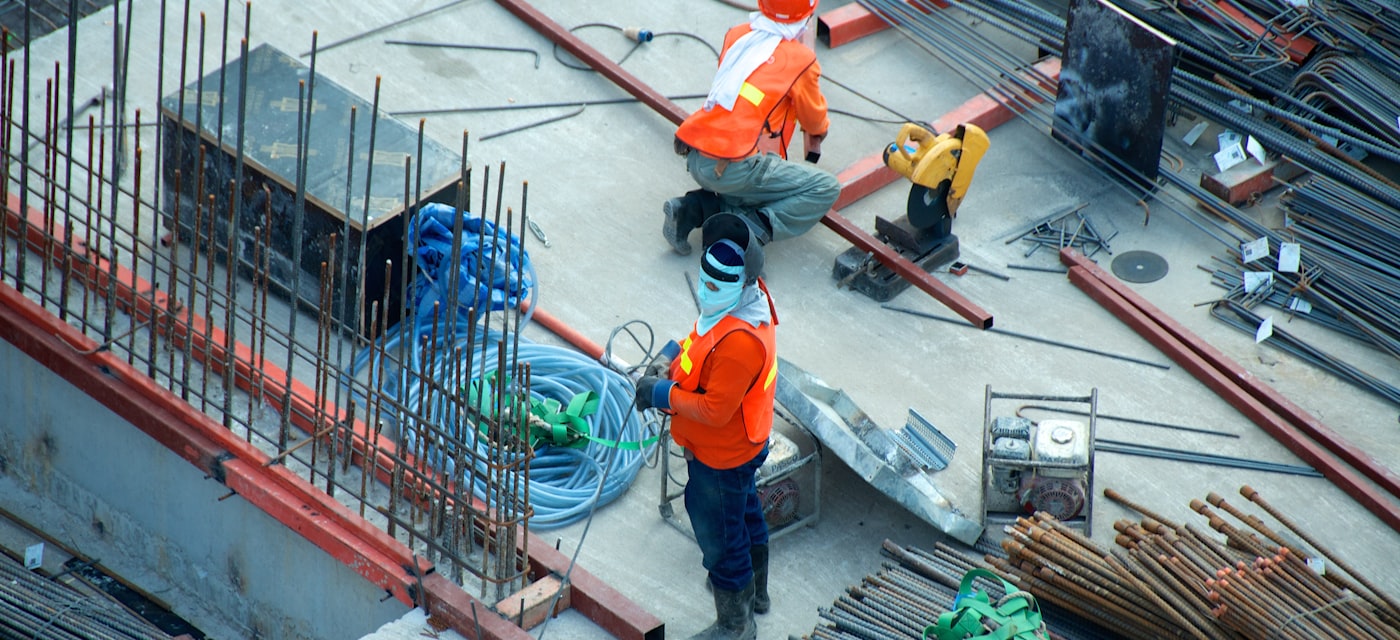
Why Construction Vibration Monitoring Matters
Construction activities generate significant vibrations that travel through the ground and into nearby structures. Pile driving, heavy machinery operation, blasting, demolition, and jackhammering can all produce vibrations strong enough to damage buildings, disturb residents, and create legal liability. Understanding and documenting these vibrations is essential for responsible construction management.
A seismograph app for construction vibration monitoring gives project managers, engineers, and building owners a practical, accessible tool for tracking vibration levels in real time and building a documented record of what occurred when.
Understanding PPV: Peak Particle Velocity
The key measurement in construction vibration monitoring is Peak Particle Velocity (PPV), measured in mm/s or inches/second. PPV describes the maximum rate at which soil particles move during a vibration event. Regulatory limits for PPV vary by country and context, but common guidelines include:
- Historic buildings and sensitive structures: 2-5 mm/s PPV
- Standard residential buildings: 5-10 mm/s PPV
- Industrial buildings: 10-50 mm/s PPV
- Human perception threshold: approximately 0.3-1 mm/s PPV
Note that smartphone-based seismographs display acceleration in g-force or m/s^2 rather than PPV directly. However, the relative comparison and trend monitoring capabilities of Pocket Seismograph are genuinely useful for preliminary assessment and ongoing monitoring even without direct PPV calibration.
How Pocket Seismograph Helps with Construction Monitoring
Real-Time Vibration Visibility
When construction activity is ongoing nearby, Pocket Seismograph gives you immediate visual feedback. You can see in real time whether a particular activity (pile driving vs. excavation, for example) produces higher amplitude vibrations at your location. This is valuable for deciding whether to escalate concerns to a structural engineer or official monitoring service.
Timestamped Event Log
The session logging feature records every vibration session with a precise timestamp. This creates a chronological record that can be cross-referenced against the construction schedule. If a crack appears in a wall, you can check whether the construction activity at the time of discovery correlates with elevated vibration levels in your log.
Baseline Documentation
Before construction begins nearby, you can use Pocket Seismograph to establish a vibration baseline at your location. This pre-construction baseline is essential for distinguishing between pre-existing conditions and construction-induced damage. Without baseline documentation, it is nearly impossible to prove that vibrations from a specific project caused specific damage.
Multiple Location Comparison
By running the app at different locations in a building, you can identify which areas experience the strongest vibration transmission. Rooms directly above a parking garage or basement, corners of buildings, and spaces adjacent to shared walls are typically most affected.
Limitations and When to Call a Professional
Pocket Seismograph is an excellent first-response and ongoing awareness tool, but it has important limitations for professional construction monitoring:
- It displays acceleration values, not calibrated PPV readings required for regulatory compliance
- Consumer MEMS accelerometers do not meet the precision standards of professional monitoring equipment
- Legal disputes typically require certified seismic monitoring reports from accredited measurement services
The recommended workflow is to use Pocket Seismograph for initial assessment and ongoing informal monitoring, and engage a professional seismic monitoring service when vibration levels seem elevated, when regulatory compliance documentation is required, or when legal action is being considered.
Practical Setup for Construction Site Monitoring
To get the most useful data from Pocket Seismograph near a construction site:
- Place the phone on a concrete floor, structural wall, or other element directly connected to the building foundation
- Avoid placing the phone on furniture, carpet, or soft surfaces that will dampen the signal
- Run sessions during active construction periods and during quiet periods to establish contrast
- Note the type of construction activity occurring at the time of each measurement in your own records
- Take screenshots of notable waveform events for documentation purposes
Get Started with Pocket Seismograph
Whether you are a building owner near a construction site, a facility manager responsible for sensitive equipment, or an engineer doing preliminary vibration assessment, Pocket Seismograph provides a free, immediately accessible first-pass monitoring capability. Download Pocket Seismograph free from the App Store and start monitoring construction vibrations today.
No account, no subscription, no internet required. Just install the app, place your iPhone on a solid surface, and watch the real-time seismograph waveform. Get Pocket Seismograph on iOS now and take control of your vibration awareness. For a complete picture, always supplement smartphone monitoring with professional calibrated equipment when compliance documentation is required. Download it free today.